Signed in as:
filler@godaddy.com
Signed in as:
filler@godaddy.com
The FTC enforces federal consumer protection laws that prevent fraud, deception and unfair business practices. The Commission also enforces federal antitrust laws that prohibit anticompetitive mergers and other business practices that could lead to higher prices, fewer choices, or less innovation.

The antitrust laws reflect an underlying policy favoring competition that transcends those particular enactments. As the Supreme Court has stated, for instance, the Sherman Act “rests on the premise that the unrestrained interaction of competitive forces will yield the best allocation of our economic resources, the lowest prices, the highest quality and the greatest material progress, while at the same time providing an environment conducive to the preservation of our democratic political and social institutions.” Northern Pac. Ry. Co. v. United States, 356 U.S. 1, 4 (1958).

The Avanced water treatment technology combines four wadvanced water treatment components in one system:
1. Mechanical filtration: Simply put - the pores of the filter are smaller than the particles they remove. sediment filet holes are measured in microns.
The human eye can see down to 35-40 microns.
A human hair is a 100 microns
A human red blood cell is about 5 microns across.
Rust, dirt, sand, silt, iron, comes to your home in many different sizes.
Standard sediment filter micron sizes are 1,5, 10,20 and 25 microns. The main deficiencies of theses filters happens when particles (contaminants) are trapped within, and not just on the surface of, the porous filter material. Such filters often capture the majority of the contaminants in the initial portion of the filter while leaving the latter portions relatively unused, leading to premature clogging and reduced filtration efficiency Sediment filters whose porosity decreases with depth, or porosity-graded filters, which are an example of a functionally graded material, can improve filtration efficiency. Aquametrics uses gradient depth filters.

2. Water softeners remove cation Hardness ions. They use a technology called ion exchange. They exchange sodium for calcium and magnesium.
Water softeners cannot prevent the damaging effects of Anion hardnesstb
Sulfates
Silicates
Flouride
Bromine
Phosphate
Chloride
Carbonate
Hydride
Aquametrics uses a next generation technology which can treat both cation and anions such as silica and calcium sulfate. The special blended water treatment media is specially blended for each municipality. This special media resides in the top portion of the split level tank.
3.The bottom portion of the tank hold another state of the art purification media. This incredible catalytic carbon, has one of the largest surface areas in the Water treatment industry. It is enhanced with Special impregnated material which can remove Arsenate, Arsenide, Chromium, Copper, Cyanide, Fluoride,
Lead, Mercury and Selenium.
This special carbon can be regenerated on site to 99% of the original capacity.
it is hands-down the best chloramine removal carbon we have ever tested.
Independently Tested to meet ANSI/NVSF 61

Vortech® is the world’s most innovative and efficient universal distribution system for water treatment systems, in filtration and softening applications. The design creates fluidity of the media bed and extends contaminant removal capacity; which means less regenerations and significant reduction of water use.
4.
The Turbo Descaler is an Electrochemical
Scale Removal & Prevention device.
The turbo descaler is a patent pending ,self-diagnosising ,modulating pure sine wave signal. The electrochemical device has 2 certifications by the FCC .
Electrochemical Scale Removal & Prevention The descaler changes the molecular structure of the minerals (calcium and magnesium) that make up hardness. The process allows these healthy minerals to remain in your water without sticking to the sides of your pipes and appliance heating elements. Our descaler removes existing limescale from pipes and the heating elements of hot water heaters, dishwashers and other appliances and prevents new limescale. Appliance lives are lengthened. Water flow from fixtures like showerheads increases


ScaleX is a combined treatment.The two types of medias in the tank are cation scale prevention and anion scale prevention. The Descaler is anElectrochemical Scale Removal & Prevention device. Two different applied sciences working together to accomplish the same goal. The goal is to keep hardness and scale from destroying your plumbing and appliances. Preventing heavy metal scale from ruining your fixtures and surfaces with impossible to remove deposits. Two very good technologies combining to make one great system. The descaler changes the molecular structure of the minerals (calcium and magnesium) that make up hardness. The process allows these healthy minerals to remain inScaleX is a combined treatment.The two types of medias in the tank are cation scale prevention and anion scale prevention. The Descaler is anElectrochemical Scale Removal & Prevention device. Two different technologies working together to accomplish the same goal. The goal is to keep hardness and scale from destroying your plumbing and appliances. Preventing heavy metal scale from ruining your fixtures and surfaces with impossible to remove deposits. Two very good systems combining to make one great system. The descaler changes the molecular structure of the minerals (calcium and magnesium) that make up hardness. The process allows these healthy minerals to remain inSilicates (SiO -) 2 • Phosphates (PO 3-)4 • Carbonate (CO 2-)3 • Fluoride (F-) • Chloride (Cl-) • Bromide (Br-) • Hydride (H-) ScaleX works in a process of nucleation in which the media absorbs cations from its surroundings in the form of crystal and release CO2 in the form of gas → splitting a gas molecule. Example: photosynthesis. Scale X is also an exothermic process in which the media separates the anions (negatively charged) from positively charged cations in the form of ionic bonds on the surface called EXO (outside) on very strong positively charged beads. Result:Negatively charged energy is separated from water and released and joined them in a form of electricity. Example: Making ice, rusting iron or chemical bonds. • Carbonate scale Treatment
Electrochemical Scale Removal & Prevention The descaler changes the molecular structure of the minerals (calcium and magnesium) that make up hardness. The process allows these healthy minerals to remain in your water without sticking to the sides of your pipes and appliance heating elements. Our descaler removes existing limescale from pipes and the heating elements of hot water heaters, dishwashers and other appliances and prevents new limescale. Appliance lives are lengthened. Water flow from fixtures like showerheads increases The tank is leap forward in delivery technology. It’s a
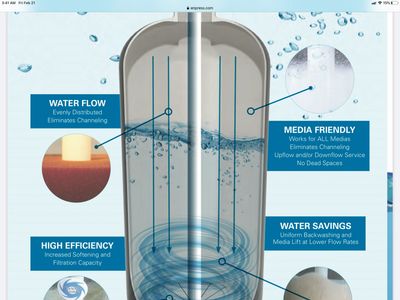
Vortech®. Vortech® is the world’s most innovative and efficient universal distribution system for water treatment systems, in filtration and softening applications. The design creates fluidity of the media bed and extends contaminant removal capacity; which means less regenerations and significant reduction of water use.
potential clogging and build-up Increase in softening capacity, due to improved flow through media No channeling of media, providing a cleaner and more efficient system Environmentally-friendly; reduction in required backwashtimes due to improved bed lift and mixing at lower flow rates Cost-efficient softening regeneration, reducing salt consumption The science of the tank media’s: Definitions: Negative (-): When the anion is represented with SiO 2-, Nucleation: a nucleation reaction occurs when a strong negatively charged surface SiO -) absorbs VORTECH -The Revolutionary New Distribution Technology FEATURES & BENEFITS Requires up to 30% less backwash flow rate, conserving water for the consumer High flow design maximizes today’s high efficiency valve technology Permanent attachment of dip tube to distributor, so when servicing a valve, distributor stays in place; no more rebedding Eliminates gravel, saving net costs and weight for shipping Improved system pressure drop characteristics Self-cleaning nozzle design eliminates the charge indicates that it has 2 less protons than that of total number of electrons.
Positive (+): When the cation or “+“ sign is accompanied by a number like +2 then it implies the cation with +2 charge has 2 less electrons than the total number of protons.2positive ions from the surroundings in the form of energy and release them in form of crystals and join them wirh anions released in the seperated form (exothermic reaction) in the surroundings. The reactions are physical chemistry.The formation of heavy deposits of calcium and magnesium, silicate and sulfate scaleNucleation Result:Calcium and Magnesium is absorbed from hard water on the surface and released into the form of CaCO crystals. Example: Evaporation or melting ice.Exothermic Scale X is an exothermic process in which the media separates the anions (negatively charged) from positively charged cations in the form of ionic bonds on the surface called EXO (outside) on very strong positively charged beads. Result:Negatively charged energy is separated from water and released and joined them in a form of electricity. Example: Making ice, rusting iron or chemical bonds. • Carbonate scales Treatment . A nucleation assisted crystallization media causes anions to flow in a fluidized direction along with CaCO3 crystals, because they are created on the strong negative side of media and the temporary hardness problem is solved. This is how we write the equation Ca(HCO3)2 →CaCO3+H2O+CO2

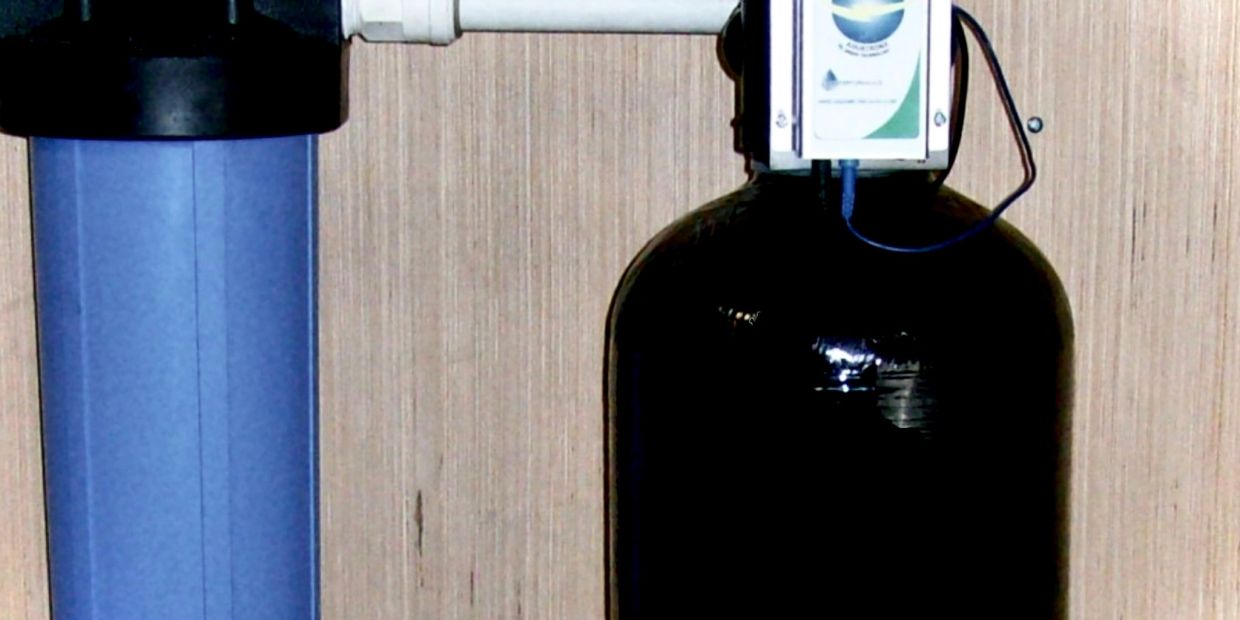
The first component in the treatment tree will be a 20” big blue filter housing. It will utilize a Dual Gradient 25-1 (outside starts at 25 microns and inside ends at 1 micron). Extremely high load filter for particulates. We will be using a 2.5 cubic ft. Mid-level Vortech tank. The treatment tank will be an up flow. No valve or power required. The system does not backwash. No drain required. The bottom portion of the tank is catalytic Carbon. The top portion is CT nucleation media. The last component is the descaler.
The bottom chamber of the tank holds an enhanced catalytic carbon. This state of the art purification media has one of the largest surface areas in the Water treatment industry. It is enhanced with Special impregnated material which can remove AThis catalytic carbon can be regenerated on site to V 99% of the original capacity.
It is hands-down the best chloramine removal carbon we have ever tested.
Independently Tested to meet ANSI/NSF rsenate,
Arsenide, Chromium, Copper, Cyanide, Fluoride, Lead, Mercury and Selenium. This catalytic carbon can be regenerated on site to V 99% of the original capacity.
It is hands-down the best chloramine removal carbon we have ever tested.
Independently Tested to meet ANSI/NSF
The descaler changes the molecular structure of the minerals (calcium and magnesium) that make up hardness. The process allows these healthy minerals to remain in your water without sticking to the sides of your pipes and appliance heating elements. Our descaler removes existing limescale from pipes and the heating elements of hot water heaters, dishwashers and other appliances and prevents new limescale. Appliance lives are lengthened. Water flow from fixtures like showerheads increases.
Description of CATALYTIC CARBON
CATALYTIC CARBON is Coconut carbon
• CATALYTIC CARBON is Certified by WQA to NSF/ANSI 61 Standard
• CATALYTIC CARBON is Catalyzed with Iron (“Catalytic Structure”)
• Iron Catalyst has the highest Oxidation and Adsorption pores “Inside as well as Outside the Activated Carbon”
• Surface of CATALYTIC CARBON ranging from 2000 m2/g to 2500 m2/g Iron Particles coated inside and outside the micro-pores of CATALYTIC CARBON® eliminates the need of expensive Ion-Exchange and Membrane Process to remove contaminants
• Suspended Solids ≤ 1 micron • Humic Substances (organics)
• Tannins and Lignin • Color and Odor • Hydrogen sulfide (H2S) • Chloramines
• Trihalomethanes (THMs)
• Phenols and p-nitro phenol
• All kind of Dyes
• Heavy Metals (inorganic)
• Including Arsenate, Arsenide, Chromium, Copper, Cyanide, Fluoride, Lead, Mercury and Selenium.
Huge surface area
1.Mechanical Filtration (fine particles, TSS, Turbidity down to 1 micron)
2. Adsorption of organic contaminants 3. Adsorbtion of inorganic contaminants (e.g. As, Heavy Metals, Radionuclides)
To enhance the catalytic activity of carbon, the surface is modified by a chemical process in which the electronic structure of the carbon is altered in such a manner that the resulting carbon offers enhanced catalytic capability". This process results in catalytic carbon. Catalytic carbon has several advantages over tradational carbon such as better chlorine/chloramines capacity.catalytic Carbon is an excellent option for catalytic carbon filtering chlorine, chloramines, THMs, H2S and other contaminants in the water. CATALYTIC CARBON coated with iron-hydroxide, has huge capacitiy for humic substances, phosphates, copper and many other heavy metals Catalyst, in chemistry, any substance that increases the rate of a reaction without itself being consumed. High oxygen on surface of Activated Carbon is the most important factor which influence its surface characteristics. To achieve these, the surface has to be treated in a very special way. The larger oxygen content the higher the hydrophilic character of the carbon surface. Catalytic carbon has a special treatment that gives an activated carbon a unique acid-base characteristiques. Regeneration of Catalytic Carbon is a very unique technology to Regenerate contaminated CATALYTIC CARBON and re-activate it up to 99% of its original capacity.> Desorption and Destruction of all organics and adsorbed heavy metals can be achieved by 1% strength solution of (Catalyzed Super Oxide). Catalyzed Super Oxide reactions are based on Fenton’s like reaction which generates hydroxyl radicals (•OH). These Hydroxyl radicals are so strong that it oxidizes all possible organics from the surface of Activated Carbon.
85% of the United States has hard water, i.e., containing calcium and magnesium of 7 gpg (grains per gallon) or more. That statistic underlies the Home Water Plant Phase 3 scale treatment and prevention design. Calcium and magnesium, or carbonate, scaling seems an ever-present problem, and the Home Water Plant is designed to treat almost all scale causing minerals and salts. How is limescale dissolved in pipes and appliances? The Home Water Plant Descaler uses the carbonic acid already in the water. Limescale is composed mainly of calcium carbonate.. Calcium, magnesium, and manganese carbonates are all insoluble in water, but are soluble in weak acids. All bodies of water scavenge CO2 from the air to form carbonic acid. CO2 is also a byproduct of lime scale formation. Carbonic acid contains two hydrogen ions. Descaler electrical energy frees one of these hydrogen ions in carbonic acid via an electrochemical reaction.The Hydrogen ions derived from the carbonic acid react with the solid calcium carbonate, limescale, to form soluble calcium and bicarbonate ions. The Home Water Plant Descaler sends out a continuous electrochemical signal that provides activation energy for separating a hydrogen ion from carbonic acid already in the water. The freed hydrogen ion combines with the solid CaCO3, limescale, and converts it into soluble ion. The Home Water Plant Descaler’s electrochemical signal also causes An interruption in the valence attraction of the cation and anion ions. Scale ions that cannot bond together cannot form scale. The electrochemical signals also precipitates soluble hardness ions into inert micro crystals. Sometimes when water evaporates a white dust can’t be seen, but it wipes right off. We like to call it “scale dust”. There are two different types of medias blended in the upper portion of the tank.They are cation scale prevention and anion scale prevention. The Descaler is anElectrochemical Scale Removal & Prevention device. Two different applied sciences working together to accomplish the same goal. The goal is to keep hardness and scale from destroying your plumbing and appliances. Preventing heavy metal scale from ruining your fixtures and surfaces with impossible to remove deposits. Two very good technologies combining to make one great system. The descaler changes the molecular structure of the minerals (calcium and magnesium) that make up hardness. The process allows these healthy minerals to remain
The two types of FILTERSORB® units are SP3 scale prevention and SPA anion scale prevention.SP3 units prevent cationic scale based on positively charged ions such as calcium and magnesium and with nucleation it changes them into CaCO3 crystals. SPA units prevent scale based on negatively charged ions such as sulfates, silicates and phosphates (Calcium phosphate). FILTERSORB® CT: Mixed media. FILTERSORB® CT units prevent scale of both cations and anions, both positively and negatively charged ions. Watch- Water® recommends a mix of 50 % SP3 media and 50 % SPA media. The FILTERSORB® systems do not need any regeneration, no chemical feed and no electrical valve head or waste water outlet. FILTERSORB® CT is a continous up-flow system. FILTERSORB® CT systems can treat both: • Point-of-entry (POE) • Point-of-use (POU) These systems will reduce the scale of calcium, magnesium, sulfates, silicates including phosphates. SP3 is the safest technology media without releasing any chemicals over the competition media and can provide more power. Instead of using aluminium and calcium on the surface Watch-Water® used strong glass surface as negatively charged beads. When the total hardness is oriented in up-flow direction, the electrons (SO 2-, SiO -, PO 3-, OH-, Cl-) flowed together with the positive ions (permanent hardness) but FILTERSORB® SPA is added as a combined treatment the electrons separated from positive ions.
CATALYTIC CARBON is made of activated coconut shell carbon. This Granulated Activated Carbon which is (highly activated) by catalysed iron-hydroxide, which enhances the adsorption of contaminants that have negative charge. CATALYTIC CARBON is the only available Carbon in the market which is regenerable. Iron Catalyst has the highest Oxidation and Adsorption pores “Inside as well as Outside the Activated Carbon. Media Description: High content (10%) Feroxyhyte (FeOOH) coated GAC CATALYTIC CARBON Removal methods: 1. Mechanical Filtration (fine particles, TSS, Turbidity down to 1 micron) 2. Adsorption of organic contaminants 3. Adsorbtion of inorganic contaminants (e.g. As, Heavy Metals, Radionuclides) Suspended Solids ≤ 1 micron • Humic Substances (organics) • Tannins and Lignin • Color and Odor • Hydrogen sulfide (H2S) • Chloramines • Trihalomethanes (THMs) • Phenols and p-nitro phenol • All kind of Dyes • Heavy Metals (inorganic) • Including Arsenate, Arsenide, Chromium, Copper, Cyanide, Fluoride, Lead, Mercury and Selenium Regenerate contaminated CATALYTIC CARBON® and re-activate it up to 99%. Desorption and Destruction of all organics and adsorbed heavy metals can be achieved by 1% strength solution Catalyzed Super Oxide reactions are based on Fenton’s like reaction which generates hydroxyl radicals (•OH). These Hydroxyl radicals are so strong that it oxidizes all possible organics from the surface of Activated Carbon.
The Turbo Descaler is an Electrochemical Scale Removal & Prevention device. The turbo descaler is a patent pending ,self-diagnosising ,modulating pure sine wave signal. The electrochemical device has 2 certifications by the FCC . Electrochemical Scale Removal & Prevention The descaler changes the molecular structure of the minerals (calcium and magnesium) that make up hardness. The process allows these healthy minerals to remain in your water without sticking to the sides of your pipes and appliance heating elements. Our descaler removes existing limescale from pipes and the heating elements of hot water heaters, dishwashers and other appliances and prevents new limescale

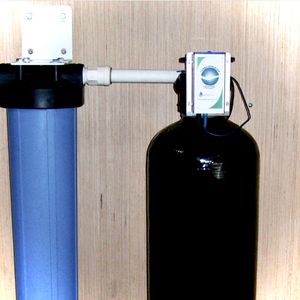
4 water treatment components in one system.
2 autonomous treatment medias in seperated chambers separated by a dispersion plate.
Suspended Solids removed ≤ 1 micron.
• Color, Taste and Odor.
• Hydrogen sulfide (H2S).
• Chloramines And Chlorine.
• Trihalomethanes (THMs).
• Heavy Metals.
• VOCs.
Cationhardness

These carbons can be be cleaned and restored to their original effectiveness by a process called regeneration. Utilizing a product called SUPEROXY. This regeneration is accomplished by a revolutionary new process of desorption. It is accomplished in the location of where the carbon sits. And can be done many times.
We use cookies to analyze website traffic and optimize your website experience. By accepting our use of cookies, your data will be aggregated with all other user data.